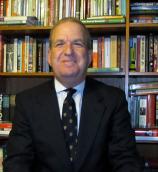
Stuart Shiffman

Biography

Stuart Shiffman


A lifelong avid reader, upon his retirement after 22 years as a state court judge in Illinois, Stuart Shiffman was looking for an opportunity to turn passion into a project. Stuart is an active participant in the "Law and Literature" movement, where works of literature are examined in an effort to better understand legal issues. He also served on the faculties at Illinois State University and the University of Illinois Springfield, where he taught several legal subjects. Additionally, he serves on two legal book award committees. Beyond books about the law, he enjoys biographies, history, politics and sports with a special interest in golf. And now that he has grandchildren, Stuart enjoys spreading the joy of reading and rediscovering new classics with them each year.

Stuart Shiffman

Reviews by Stuart Shiffman

by Martin Limón - Fiction, Suspense, Thriller

Blackjack pro Ronnie “the Technician” Redfield has his life blown up when a casino owner decides to take him down. Card counting isn’t illegal, but the court battle costs Ronnie his livelihood, his sobriety and his family. His wife is dead, and his teenage daughter, Margot, has disappeared. Now, three years later, he’s just about dug himself out of his hole when his old army buddy, “Wild” Bill Grimsley --- now a casino handler for high rollers --- shows up to drag Ronnie back into the action. Bill has a revenge plot to take down Rodrigo Gwynne, the nastiest, most exploitative casino owner on the Strip. All Ronnie has to do is what he does best: make money off the house. If he succeeds, his share of the take will be enough to get his life back on track --- and hire a detective to track down Margot.

by Florence Hazrat - History, Language Arts, Nonfiction

You know the lively exclamation mark, the controversial semicolon, and the often-omitted apostrophe. But would you recognize a percontation point? How about an obelus? In ON THE MARK, Florence Hazrat argues that all punctuation marks, from the most forgotten to the most ubiquitous, are worthy of our attention. After all, the history of punctuation is the history of humankind. The first punctuation mark was a triangular symbol pressed into clay somewhere in Mesopotamia. Spaces between words were unknown for millennia, until a group of Irish monks pioneered them in the eighth century. Across ages and cultures, amid technological revolutions and radical changes in communication, these dots and dashes have reshaped the societies that created them.

by Jack Friday - Fiction, Humor, Mystery

Meet Peter Key, a self-proclaimed “laziest private investigator in Texas” (it’s harder than it looks), an unapologetic bisexual, a dedicated stoner, and the surprised recipient of a windfall inheritance from an uncle he barely knew. Peter’s life was a mess before, but now ---  as the owner of a dilapidated house in one of the most desirable neighborhoods in Austin --- he has a mountain of debt to deal with and pressure to sell from every side. But Peter doesn’t like to be pushed around. And when he discovers a bag full of cash, he starts to suspect that his uncle’s death wasn’t an accident. He soon finds himself pulled into a lethal game where not everybody plays by the rules. Fortunately, Peter never has been good at following rules.

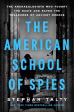
by Stephan Talty - History, Nonfiction

In 1942, as head of the newly formed OSS, Wild Bill Donovan deployed spies across Europe and around the world to try to thwart the Nazis. In Greece, Nazis weren’t just taking over territory; they were seizing and threatening to destroy some of the world’s most important and valuable historical monuments and artifacts. Donovan tapped a young Ivy League-trained archaeologist named Rodney Young to assemble and lead a team of spies to collect intel. Young set about recruiting the most unlikely of spies --- academics, classicists, epigraphers, and other specialists and scholars --- who would come to be known as “the Greek Desk.” These men and women, along with their Greek allies, went undercover and tried desperately to protect some of the world’s most significant treasures.

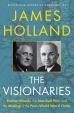
by James Holland - History, Nonfiction

James Holland’s deep knowledge of WWII gives him unique insight and appreciation for its historic aftermath. THE VISIONARIES chronicles the prelude to the Marshall Plan --- from Franklin Roosevelt’s historic “four freedoms” speech and “Good Neighbor Policy” towards Central and South America to the landmark Bretton Woods Conference of July 1944, which established the International Monetary Fund and World Bank, pillars of world stability. But it was Truman who pushed for the Marshall Plan, which in 1948 kickstarted via economic assistance the fastest period of growth in European history. However, Holland warns that we in the West have become complacent, less willing to safeguard the freedoms that extended prosperity has allowed.

by Jonathan W. Jordan - Biography, History, Nonfiction

One was the soldier-statesman who would become America’s 34th president. The other was the British icon who refused to surrender in democracy’s darkest hour. Together they launched invasions, toppled tyrants, and shaped the world as the nations they served drifted apart. From world war to the Cold War, from Pearl Harbor to the hydrogen bomb, Winston Churchill and Dwight Eisenhower faced down Hitler, Stalin and Khrushchev and stood together in the uneasy dawn of the nuclear age. Through triumph and loss, they forged a remarkable friendship that weathered the decline of an empire and the rise of a superpower.

by Sarah Isgur - Law, Nonfiction, Politics

Most people get the Supreme Court all wrong. A smattering of high-profile decisions have popularized a simplistic idea of the Court and its justices. Yes, six of them were appointed by Republicans and only three by Democrats. So how does that 6-3 conservative majority explain why in the 2024-25 term, conservative Brett Kavanaugh was more likely to agree with liberal Elena Kagan than conservative Neil Gorsuch? Or why the court threw shade at Florida’s attempt to ban drag shows? To truly understand the Court, argues Sarah Isgur, you have to look beyond partisan politics --- the “X-Axis.” The wisest court watchers apply another measuring stick, the “Y-Axis," where the nine justices span from order-loving institutionalists to true chaos agents.

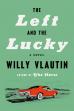
by Willy Vlautin - Fiction

Eddie Wilkens is a workaholic house painter. His wife has left him to her regret, and his main employee, Houston, is a loafer and scoundrel who barely shows up for work. Eddie is a thoughtful man who rarely gets angry, but he is ruled by a guilt that he has carried for nearly 20 years. Next door, a woman and her two sons move in with her frail and aging mother. The youngest boy, eight-year-old Russell, is quiet and small for his age and lives in constant terror of his increasingly lost and troubled 15-year-old brother, Curtis. As their mother struggles to keep the family together and the grandmother’s health begins to falter, they find themselves unable to protect Russell and themselves from Curtis’ cruelty, which threatens to explode in frenetic violence. Though neither knows it, Russell and Eddie will become each other’s saving grace.

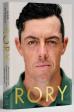
by Alan Shipnuck - Biography, Nonfiction, Sports

Rory McIlroy contains multitudes. He can overwhelm a golf course with his transcendent talent and then, at the next tournament, look utterly lost. McIlroy is golf’s most eloquent ambassador and a trash-talking troll, sometimes in the same press conference. The child of a working-class family from a small town in a war-torn homeland now commutes to work in his own private jet and counts billionaires as confidants. A dozen years ago, McIlroy asked Alan Shipnuck a question about the player he had modeled himself after, Tiger Woods: “What’s he really like?” As McIlroy enters the last act of his highly eventful career, this book is a chance to redirect that old question and try to understand a man of deep complexity and contradictions.

by Paul Fischer - Biography, Nonfiction, Performing Arts

In the summer of 1967, as the old Hollywood studio system was dying, an intense, uncompromising young film school graduate named George Lucas walked onto the Warner Bros. backlot for his first day working as an assistant to another up-and-coming, largely unknown filmmaker, Francis Ford Coppola. At the exact same time, across town on the Universal Studios lot, a film-obsessed 20-year-old, Steven Spielberg, longed to break free from his apprenticeship for the struggling studio and become a film director in his own right. Within a year, the three men would become friends. THE LAST KINGS OF HOLLYWOOD tells the thrilling, dramatic inside story of how the three filmmakers rivalled and supported each other, fell out and reconciled, and struggled to reinvent popular American cinema.