One of the great perks of this job is that I’ve gotten to meet a lot of librarians and teachers who are doing the field work on how to use graphic novels as reading and education tools. As we’ve attempted to build a site that they (as well as general readers) can use as a resource for all their needs, I’ve gotten to know the people who are "working it" daily, including some of the people behind the Great Graphic Novels for Teens (GGNFT) list. This annual list is one of my favorites, because it shows the diversity in YA publishing. I have to admit, I find the entire YA genre fascinating, whether it’s prose or comics; it’s where so much of the action is these days, and where so much interesting and evocative work is being published. The GGNFT list comes out yearly, and it showcases a huge listing of age-appropriate works.
Read More
You only think you know the legend of Pinocchio. His story wasn’t that sweet, and that was before the vampires came to town and killed Gepetto. What’s a poor wooden boy to do? Start lying like crazy so his nose grows and pierces their hearts. He’s a natural-born vampire killer, and he’s got the scars to prove it.
The ongoing adventures of Pinocchio, Vampire Slayer come to us courtesy of writer Van Jensen and artist Dusty Higgins, who launched the idea. The book was recently named to the American Library Association’s list of Great Graphic Novels for Teens and it’s catching on strong with new readers. We caught up with Jensen and Higgins to discuss how it all came together.
Congratulations on your recent naming to ALA’s list of Great Graphic Novels for Teens. Were you surprised to see this happen?
Higgins: Surprised doesn’t seem like the right word. There’s an implication there that we didn’t think it was a good story and we’re surprised someone else did. I am happy and honored that the folks at the Young Adult Library Services Association enjoyed it enough to put it on the list. And yeah, I was surprised.
Jensen: I didn’t even know we’d been nominated when I stumbled onto the news on a comics blog, and at first I figured it was a mistake. The other books on that list are really phenomenal. To be listed among them is an amazing honor. And, as the grandson of a librarian, it makes it that much more special to be recognized by the ALA.
Dusty, the book was your idea?
Higgins: I think when most people think about it, the idea is pretty obvious. It began as a throwaway warm-up sketch that kept nagging at me, developed into more sketches, and perhaps went a little too far. Then I got Van involved, and it went even further than that. As we kicked ideas back and forth, the story just kept getting bigger and bigger.
It must have been a lot of fun to put this story together. Did people take it seriously when you pitched the idea to them?
Jensen: When Dusty first approached me about doing the book, I didn’t even take it seriously. The idea of Pinocchio killing vampires is super clever, but it’s easy to write it off as nothing more than a joke. The challenge that Dusty and I gave ourselves was to take that little joke and turn it into a fully realized story. That was a fun process, largely because, as we went back to Carlo Collodi’s original story, we understood how rich those characters are and how much more potential remained for them.
We really only pitched the story to SLG, but I did show our 10-page preview to a few other comics people, and they all got a kick out of it. I think we also got it across that the book was more than just a goofy romp, so it wasn’t hard to convince people.
Higgins: I think most people were skeptical. They laughed at the name and figured it wasn’t much good beyond that one joke. The biggest hurdle was getting people to realize that not only did we have an idea for a 128-page story, but we had an idea for a trilogy. That includes our publisher. But once they started reading the story, I think, with a few exceptions, we convinced most people.
The original story of Pinocchio is fairly dark and twisted, making it fit right in with a vampire story. When did you first read the original version of the tale?
Higgins: It was early in the process, probably around the time I approached Van about the story and we started filling out the plot. We knew we wanted to pull more from the original story, and since before that I had only been familiar with the Disney version, I was surprised at how much darker the original story is.
Jensen: I had read it as a kid but forgot most of it. I went back to it after Dusty asked me to do the project, and it was really revelatory. Collodi’s version is darker, yes, but it also has better characters, more humor, and more poignancy than the Disney version, which sadly has become what everyone knows.
Are most people you encounter surprised to discover that the original story of Pinocchio is not as sweet and light as they had thought?
Higgins: Yeah. Two of my favorite examples are the cricket’s death, and Pinocchio’s almost-death by hanging.
Jensen: That’s pretty much the standard response. The original and the Disney film are extremely dissimilar, but the cartoon is so ingrained culturally. We had actually finished the book when we decided to create the little recap of the original story. If we hadn’t, I think most readers would’ve been scratching their heads to the references of Pinocchio being hanged, the cricket being killed by Pinocchio, and so much else.
So far, what has the reaction to the book been?
Jensen: It’s been incredible. I think that clever premise helped, as when news of the book first got out, it spread like crazy around the Internet. But what’s been the most rewarding is how, after people actually read the book, the vast majority seem to like it quite a lot. And what most reviewers and fans have said is that the book surprised them in that it’s a lot more than just what the premise implies.
Higgins: Good, better than I anticipated. I mean, obviously I think the story’s cool and all, but I understand this is an indie graphic novel, and Van and I are first-time writers/artists, so I kept my hopes down. But we’ve had a really good response to the story.
How did you two meet and start working together?
Jensen: We were working at the Arkansas Democrat-Gazette together, where I was a crime reporter and part-time comics critic and Dusty was (and still is) an illustrator. Our first contact actually was that my wife hired Dusty to do a comics commission for me for a birthday present. After that, we discovered our mutual interest in comics, and before long we were tossing around ideas.
Higgins: There being a handful of people working there under 30, eventually we started talking comics stuff. After Van left the paper and moved to Georgia, I got the idea for Pinocchio, Vampire Slayer and, knowing he was interested in writing, gave him a call.
What are some of your favorite graphic novels? Whose work has inspired you?
Jensen: I started working for Top Shelf in large part because I’m a fan of their books, with my favorites being Superspy, Owly, and The Surrogates. Other creators I deeply respect include Joshua Cotter, Ed Brubaker, Brian K. Vaughan, G. Willow Wilson, Mike Mignola, and Rutu Modan. I read a ton of comics, and I learn from all of them. But I can’t really say that any particular creator or book has had a singular impact on my writing.
Higgins: John Buscema, Alfredo Alcala, Mike Mignola, Charlie Adlard, and Ben Cleveland for artists. As for graphic novels, I don’t even know where to begin, so here’s a sample of stuff I read: Scott Pilgrim, almost anything with Conan in it, Northlanders, Buffy and Angel (I should note, because I know somebody is going to say it, that the only thing by Joss Whedon I had seen before Van and I started work on the book was Firefly and Serenity), The Walking Dead, Fables, World of Warcraft, and Chumble Spuzz. If you’re wondering why there isn’t more indie stuff on that list, it’s because my local comic book store doesn’t sell a lot of indie stuff.
What’s next for Pinocchio: Vampire Slayer? Do you see it as an ongoing or a finite series?
Jensen: Part way through scripting the first book, I came up with an idea for a larger mythology and roughly plotted out a three-book series. The script for the second one is finished and Dustin is cranking out some incredible artwork. It should be out in fall 2010. What we’re exploring is the question of Pinocchio’s identity, which is one of those things that is much more interesting in the original story. I can’t say for certain how many books it will take to fully explore that question, but we definitely have an end in sight.
Higgins: Right now we just have plans for a trilogy. If at some point Van or I think of a story we believe is worth telling beyond that, I’ll get back to you.
Late afternoon sun sneaks through the windows of a passport and visa office in an unnamed American city. Most customers and even most office workers have come and gone, but nine people remain. When an earthquake rips through the afternoon lull, trapping them together, their focus first jolts to their collective struggle to survive.
Read more »
February 2010
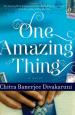
ONE AMAZING THING by Chitra Banerjee Divakaruni takes place in a passport office somewhere here in the United States when an earthquake hits and the nine people waiting for visas for travel to India are all trapped.
Read more »
Every year, the Great Graphic Novels for Teens list comes out through YALSA (Young Adult Library Services Association). More than just a fantastic resource, it's also a comprehensive look at the highest-quality graphic books to come out over the past year and a half. Because of its intrinsic value to parents, teachers, librarians, and general readers, we wanted to spotlight a few of the wonderful people who make the list happen and showcase how they do it. Meet three of the women responsible for creating this list in the first place.
Feb 2, 2010
One of the brightest stars of China’s rising manua scene, Benjamin is a wonderfully expressive artist whose images evoke three-dimensional beings. His writing is poetic, often stilted, and emotive, as though words and images are sometimes not quite sufficient for expressing everything he has inside. Remember, a collection of two stories—No One Can Fly, No One Can Remember and That Summer, That Year—is now out from Tokyopop. We talked to Benjamin via an email interview that was kindly translated by his agent in Paris, Patrick Abry. My thanks to both Benjamin and Patrick for their time.
February 1, 2010
Posted by tom
Tagged:
Jenny Christopher Randle
Jenny Christopher Randle is the sales director for Boom! Studios, publisher of such bestselling titles as Incorruptible, Irredeemable, Disney’s Hero Squad, Do Androids Dream of Electric Sheep?, and so much more. We asked her to share her history of loving comics.
Do you remember your first comic book or graphic novel?
I grew up in a very rural area with no comic shops within 30 miles, so we bought our comics at the grocery store. I would usually get an Archie Digest when Mom went shopping. It wasn’t until my sister came home with a copy of Batman: A Death in the Family that I really saw comics as anything but expanded funny pages.
What do you love about the graphic novel as a format for storytelling?
I don’t think that there is a more interactive form of storytelling than graphic novels. The reader is an active participant in the story since it is a visual medium where the reader sets the pace. You’ll find yourself taking your time on each panel of one page, and then madly flipping page after page as a story becomes more intense later in the book. Also, I love reading books over and over again. So when I have a book like League of Extraordinary Gentlemen, I know I’ll be reading it at least a dozen times and then going online to research all the obscure references that Kevin O’Neill works into his drawings.
Whose work do you admire?
There are so many. Kevin O’Neill, Chris Ware, Tony Millionaire, Alan Moore, Eddie Campbell, Joe Kelly, Guy Delisle, Renee French… And those are just creators! I also have an enormous amount of admiration for guys like Alvin Buenaventura and Chris Staros. They put out books that make everyone sit up and pay attention. The fact that they are two of the nicest people working in comics is an added bonus!
Who do you read outside of the graphic novel format?
I am all over the place really. I have a Kindle app for my iPhone, which makes flights a lot more bearable. But I’ve noticed it has also changed some of my reading habits. I have a lot of literature on my phone, books I always meant to read but never got around to. Books like Treasure Island, The Marble Faun, and Middlemarch. But I also have quick fun reads, what I generally call “beach books,” titles like The Lost Symbol, Twilight, and some Charlaine Harris. However, as much as I love my little app, I love books. I love book design, I love little details like how the paper feels in my hands, how it feels to have the weight of the book on my lap, marveling over an obscure typeface used. I’m currently reading House of Leaves. This is a book that I hope is never available in an electronic edition. This is a book that demands your attention and requires a level of mental dexterity that definitely keeps you on your toes. I am constantly flipping to one of the gazillion appendixes, squinting at footnotes, trying to find every time the word “house” is printed in purple on a page, and physically turning the book to read every word printed on the page (if you’re not familiar with the book, check out the Wikipedia entry to get an idea). I have invested so much time in this book; I now have a relationship with it! That is also why when I hear people saying print is dead, I know that they have never had this level of interaction with a book the way I have. And sadly, they probably never will, and will never seek it out either.
How many graphic novels do you read a month? How many of those are manga?
It varies, but I generally read between 10 and 12 graphic novels a month, maybe a third to a half are manga. I regularly buy Kurosagi Corpse Delivery Service and Fables when they come out in trade. I have been reading a lot of VIZ again. Their IKKI comics line is just as impressive as the VIZ Signature line, and I haven’t run out of great titles to read yet.
Which do you prefer and why: color or black and white?
I like color, but it has to be done right. I’ve seen some beautiful linework made hideous by bad color choices. I think the most important thing is that the art complement the story. And I’ll be honest here; I can get over sub-par art if the story is good. A tight plot can overcome a lot, and as long as the art isn’t detracting from the story, I can still come out the other end with a positive experience.
I guess in the end, it doesn’t really matter to me; I wouldn’t pass up a comic simply because it’s in black and white. Look at Walking Dead. That is a harrowing series, and while color would surely enhance the gore, I think that it would lose the starkness and desolation that is integral to the tone of the story.
How did you first get involved in the field professionally?
I was a Purchasing Brand Manager at Diamond Comics Distribution. It was great. I was able to work with companies such as VIZ, Top Shelf, Simon and Schuster, Macmillan, Tokyopop, and First Second. I also worked with Chip Mosher at BOOM! Studios, and we found that we worked incredibly well together. I joined BOOM! in June of 2009, and I have never experienced a tougher, more rewarding, or more fun job in my life!
What kind of reaction do you get when you tell people what you do?
Baltimore is a pretty cool town and there are a lot of people that work in the comics industry living here. Most of the time, when I’m telling people about my work and the variety of titles that BOOM! Studios and BOOM Kids! Publishes, they generally think it’s an exceedingly cool job. Which it is! I get to travel, go to book and comic conventions, read comics before they’re published, have a conversation with some of the smartest authors and artists working today… I never understand why others in the industry complain about deadlines, or having to go to shows, or having to work crazy hours. Sometimes it seems that people are vying for some “Comic Curmudgeon Award.” We are living so many people’s dreams! How many people are out there frustrated as all hell, racking their brains trying to figure out what they have to do to break into this industry? It is something that I am always aware of, and I never take it for granted.
Do you collect comics? What is the most valuable piece of art, graphic novel, or comic book in your collection?
I don’t really collect comics, since I find myself with trades most of the time. I don’t really have anything that is worth a lot of money, but my most valuable book is a copy of The Soap Lady by Renee French. I live an hour and a half from the Mutter Museum and seeing a children’s book about one of their exhibits made me the happiest girl on the face of the Earth. I bought the book years ago, before I worked at Diamond, and my husband asked Top Shelf if they would get her to sign it for me. When he came back from APE two years ago with it under his arm, signed by Renee French, I just couldn’t believe it. Renee’s art amazes me. There is something almost haunted about her work, and I still cannot read The Ticking without tears welling up.
Is there something you covet adding to your collection?
I covet more bookcases to hold my ever growing collection!
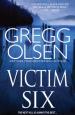
The bodies are found in towns and cities around Puget Sound. The young women who are the victims had nothing in common --- except the agony of their final moments --- and somebody carefully chose them to stalk, capture, and torture…a depraved killer whose cunning is matched only by the depth of his bloodlust.
Read more »
I heard a little piece of news today that really made me smile...and brought back lots of memories. Writer Charles Santino passed on the news that he had found an artist for his newest project, a graphic adaptation of Ayn Rand's Anthem, to be released by NAL sometime in 2011. The artist in question? Joe Staton, one of my absolute favorites in comics and one who made a huge impression on me growing up. He was the Green Lantern artist in the early '80s, and before that, he had defined the Justice Society and helped create the Huntress.