Jane T. Krebs

Biography

Jane T. Krebs


Jane T. Krebs' day job for 30 years was teaching secondary English and studying with many, many students at Carlisle High School in Carlisle, PA. Now retired, she enjoys reading and discussing a wide range of genres and topics with two book clubs. She also swaps writing every month with a lively group that began in 1986 at the Capital Area Writing Project at PSU, Harrisburg.

Jane and her husband, Harry, are lucky to have a wonderfully large and diverse family, and she loves spending time traveling, walking and laughing with them. For one of her hobbies, Jane creates kind2nature non-paper towels, which are artistic, useful and eco-friendly!

Jane has been reading books for Bookreporter.com for over a decade, and she still loves the pleasure of hitting the "send" button with a review for Tom Donadio.

Jane T. Krebs

Reviews by Jane T. Krebs

by Dave Eggers - Fiction

Cricket Dib, born on the American prairie, has no particular prospects or ambitions until, in grade school, he realizes he can draw. He soon meets a girl, Olympia Argyros, who is captivating and brilliant and far more worldly. Recognizing his talent, she convinces him to deface, with profound vulgarity, a popular playground. Under her direction, he does it willingly, already in love. Thus begins a 65-year entwining between Cricket and Olympia, encompassing friendship, working partnership and love affair. Together they go to art school --- an experience of dubious value --- and then navigate the art world for the next 50 years, together and apart.

by Manil Suri - Memoir, Nonfiction

Manil Suri grew up in a large crumbling apartment in Bombay (now Mumbai), which his parents, who were Hindu, shared with three Muslim families. At age 20, Suri broke free from their single room and came to the US, where he finally found the freedom to embrace his sexuality and find a life partner. But the room kept wrenching him back to Bombay. By now, real estate prices had risen so much that neighbors had begun conspiring to take over the room. Eventually it was only his mother, Prem, left, who had staked all her happiness on her son but was unable to escape the room’s hold on her. When a rash of mysterious incidents seemed to beset the room, Suri realized how little time he had left to convince Prem that a happier life might await beyond the four walls that both enthralled and imprisoned her.

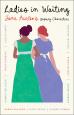
by Adriana Trigiani, Sarah MacLean, Eloisa James, Elinor Lipman, Audrey Bellezza, Karen Dukess, Emily Harding, Nikki Payne, and Diana Quincy - Fiction, Short Stories, Women's Fiction

In honor of Jane Austen’s 250th birthday, nine authors --- Adriana Trigiani, Sarah MacLean, Eloisa James, Elinor Lipman, Audrey Bellezza, Karen Dukess, Emily Harding, Nikki Payne and Diana Quincy --- have come together with wildly imaginative reboots of the lives of several of Austen’s minor characters. Written with plenty of love and wit, these clever stories star everyone from PRIDE AND PREJUDICE’s snobbish Caroline Bingley to the modern descendant of SENSE AND SENSIBILITY’s Eliza Williams, and much more. Blurring genres and taking us across the oceans, LADIES IN WAITING is a heartfelt celebration of Jane Austen and her timeless masterpieces.

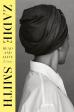
by Zadie Smith - Essays, Nonfiction

In this eagerly awaited collection, Zadie Smith brings her unique skills as an essayist to bear on a range of subjects that have captured her attention in recent years. She takes an exhilaratingly close look at artists Toyin Ojih Odutola, Kara Walker and Celia Paul. She invites us along to the movies, to see and to think about Tár, and to New York to reflect on the spontaneous moments that connect us. She takes us on a walk down Kilburn High Road in her beloved North West London and welcomes us to mourn with her the passing of writers Joan Didion, Martin Amis, Hilary Mantel, Philip Roth and Toni Morrison. She considers changes of government on both sides of the Atlantic --- and the meaning of "the commons" in all our lives.

by Adriana Trigiani - Fiction, Women's Fiction

In blue-collar Lake Como, New Jersey, family comes first. Recently divorced from Bobby Bilancia, Jess Capodimonte Baratta moves into her parents’ basement to hide and heal. Jess is the overlooked daughter, who dutifully takes care of her parents, cooks Sunday dinner and puts herself last. Despite her role as the family handmaiden, Jess is also a talented draftswoman in the marble business run by her dapper uncle Louie, who believes she can do anything (once she invests in a better wardrobe). When the Capodimonte and Baratta families endure an unexpected loss, the shock unearths long-buried secrets that will force Jess to question her loyalty to those she trusted. Fueled by her lost dreams, Jess takes fate into her own hands and escapes to her ancestral home, Carrara, Italy.

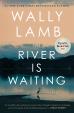
by Wally Lamb - Fiction

New fatherhood, the loss of his job, and a growing secret addiction have thrown Corby Ledbetter’s marriage to his beloved Emily into a tailspin. And that’s before he causes the tragedy that tears the family apart. Sentenced to prison, Corby struggles to survive life on the inside, where he bears witness to frightful acts of brutality but also experiences small acts of kindness and elemental kinship with a prison librarian who sees his light and some of his fellow offenders, including a tender-hearted cellmate and a troubled teen desperate for a role model. Buoyed by them and by his mother’s enduring faith in him, Corby begins to transcend the boundaries of his confinement, sustained by his hope that mercy and reconciliation still might be possible. Can his crimes ever be forgiven by those he loves?

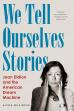
by Alissa Wilkinson - Biography, Cultural Studies, Nonfiction

Joan Didion opened THE WHITE ALBUM (1979) with what would become one of the most iconic lines in American literature: “We tell ourselves stories in order to live.” Today, this phrase is deployed inspirationally, printed on T-shirts and posters, used as a battle cry for artists and writers. In truth, Didion was describing something much less rosy: our human tendency to manufacture delusions that might ward away our anxieties when society seems to spin off its axis. Nowhere was this collective hallucination more effectively crafted than in Hollywood. In this riveting cultural biography, New York Times film critic Alissa Wilkinson examines Joan Didion’s influence through the lens of American mythmaking.

by Anne Tyler - Fiction, Women's Fiction

Gail Baines is having a bad day. To start, she loses her job --- or quits, depending on whom you ask. Tomorrow her daughter, Debbie, is getting married, and she hasn’t even been invited to the spa day organized by the mother of the groom. Then, Gail’s ex-husband, Max, arrives unannounced on her doorstep, carrying a cat, without a place to stay and without even a suit. But the true crisis lands when Debbie shares with her parents a secret she has just learned about her husband to be. It will not only throw the wedding into question but also stir up Gail and Max’s past.

by Charmaine Wilkerson - Fiction, Women's Fiction

When 10-year-old Ebby Freeman heard the gunshot, time stopped. And when she saw her brother, Baz, lying on the floor surrounded by the shattered pieces of a centuries-old jar, life as Ebby knew it shattered as well. The crime was never solved, and because the Freemans were one of the only Black families in a particularly well-to-do enclave of New England, the case has had an enduring, voyeuristic pull for the public. When Ebby's high-profile romance falls apart without any explanation, she flees to France, only for her past to follow her there. And as she tries to process what's happened, she begins to think about the other loss her family suffered on that day 18 years ago --- the stoneware jar that had been in their family for generations, brought North by an enslaved ancestor.

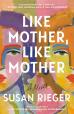
by Susan Rieger - Fiction, Women's Fiction

Detroit, 1960. Lila Pereira is two years old when her angry, abusive father has her mother committed to an asylum. Lila never sees her mother again. Three decades later, Lila rises to the pinnacle of American media as the powerful, brilliant executive editor of The Washington Globe. Lila leaves the rearing of her daughters to her generous husband, Joe. Grace, their youngest daughter, feels abandoned. She wishes her mother would attend PTA meetings, not White House correspondents’ dinners. As she grows up, she cannot shake her resentment. She wants out from under Lila’s shadow, yet the more she resists, the more Lila seems to shape her life. Grace becomes a successful reporter, even publishing a bestselling book about her mother. In the process of writing it, she realizes how little she knows about her own family.