

Reviews

Reviews

by Timothy B. Tyson - History, Nonfiction

In 1955, a 14-year-old black boy named Emmett Till was murdered by a group of white men. He had gone into a small country store a few days earlier and made flirtatious remarks to a white woman, 21-year-old Carolyn Bryant; Bryant’s husband and brother-in-law were two of Till’s attackers. THE BLOOD OF EMMETT TILL revises the history of the Till case, not only changing the specifics that we thought we knew, but showing how the murder ignited the modern civil rights movement. Timothy Tyson uses a wide range of new sources, including the only interview ever given by Carolyn Bryant; the transcript of the murder trial, missing since 1955 and only recovered in 2005; and a recent FBI report on the case.

written by Gregor Hens, translated by Jen Calleja - Memoir, Nonfiction

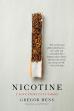
Written with the passion of an obsessive, NICOTINE addresses a lifelong addiction, from the thrill of the first drag to the perennial last last cigarette. Reflecting on his experiences as a smoker from a young age, Gregor Hens investigates the irreversible effects of nicotine on thought and patterns of behavior. He extends the conversation with other smokers to meditations on Mark Twain and Italo Svevo, the nature of habit, and the validity of hypnosis. With comic insight and meticulous precision, Hens deconstructs every facet of dependency, offering a brilliant analysis of the psychopathology of addiction.

edited by Melissa Savage - History, Nonfiction, Photography

The dynamic Río Grande has run through all the valley’s diverse cultures: Puebloan, Spanish, Mexican and Anglo. Photography arrived in the region at the beginning of the river’s great transformation by trade, industry and cultivation. In RIO, Melissa Savage has collected images that document the sweeping history of that transformation --- from those of 19th-century expeditionary photographer W. H. Jackson to the work of the great 20th-century chronicler of the river, Laura Gilpin. The photographs are assembled in thematic bundles --- river crossings, cultivation, trade, floods, the Mexican insurrection, the Big Bend region, and the estuary where the river at last meets the Gulf of Mexico.

by Jack Schaefer - Biography, Essays, History, Nonfiction

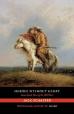
This collection of essays features 12 “heroes” from the American West. Jack Schaefer profiles pioneers of the West --- the doctors, explorers and cowboys who settled the challenging landscape and built communities in the Old West. These unsung champions highlight the unglorified work of the West that was achieved without violence and gunslinging. Schaefer shares the lives of Grizzly Adams, George A. Ruston, John “Snowshoe” Thompson, John Phillips, Washakie, John S. Chisum, Thomas J. Smith, Valentine T. McGillycuddy, Charles Fox Gardiner and Elfego Baca.

by Chris Smith - Entertainment, History, Nonfiction

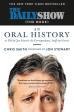
For almost 17 years, “The Daily Show with Jon Stewart” brilliantly redefined the borders between television comedy, political satire and opinionated news coverage. It launched the careers of some of today's most significant comedians, highlighted the hypocrisies of the powerful and garnered 23 Emmys. Now the show's behind-the-scenes gags, controversies and camaraderie have been chronicled by the players themselves in this oral history, which takes the reader behind the curtain for all the show's highlights --- from its origins as Comedy Central's underdog late-night program hosted by Craig Kilborn to Jon Stewart's long reign to Trevor Noah's succession.

by Mark Ribowsky - Biography, Music, Nonfiction

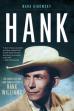
Hank Williams, a frail, flawed man who had become country music’s first real star, instantly morphed into its first tragic martyr when he died in the backseat of a Cadillac at the age of 29. Six decades later, Mark Ribowsky traces the miraculous rise of this music legend --- from the dirt roads of rural Alabama to the now-immortal stage of the Grand Ole Opry, and, finally, to a lonely end on New Year’s Day in 1953. Examining Williams’ chart-topping hits while also recreating days and nights choked in booze and desperation, HANK uncovers the real man beneath the myths, reintroducing us to an American original whose legacy, like a good night at the honkytonk, promises to carry on and on.

edited by Brian F. Codding and Karen L. Kramer - Economics, Nonfiction

Foraging persists as a viable economic strategy both in remote regions and within the bounds of developed nation-states. Given the economic alternatives available, why do some groups choose to maintain their hunting and gathering lifeways? Through a series of detailed case studies, the contributors to this volume examine the decisions made by modern-day foragers to sustain a predominantly hunting and gathering way of life. What becomes clear is that hunter-gatherers continue to forage because the economic benefits of doing so are high relative to the local alternatives and, perhaps more importantly, because the social costs of not foraging are prohibitive.

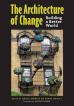
edited by Jerilou Hammett and Maggie Wrigley - Architecture, Nonfiction

THE ARCHITECTURE OF CHANGE is a collection of articles that demonstrates the power of the human spirit to transform the environments in which we live. This inspiring book profiles people who refused to accept that things couldn’t change, who saw the possibility of making something better and didn’t hesitate to act. It explores communal architecture produced not by specialists but by people, drawing on their common lives and experiences, who have a unique insight into their particular needs and environments. Running through their stories is a constant theme of social justice as an underlying principle of the built environment.

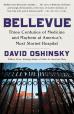
by David Oshinsky - History, Medicine, Nonfiction

Bellevue Hospital, on New York City's East Side, occupies a colorful and horrifying place in the public imagination: a den of mangled crime victims, vicious psychopaths, assorted derelicts, lunatics and exotic-disease sufferers. In its two and a half centuries of service, there was hardly an epidemic or social catastrophe --- or groundbreaking scientific advance --- that did not touch Bellevue. David Oshinsky chronicles the history of America's oldest hospital and, in so doing, also charts the rise of New York to the nation's preeminent city, the path of American medicine from butchery and quackery to a professional and scientific endeavor, and the growth of a civic institution.

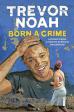
by Trevor Noah - Essays, Memoir, Nonfiction

Trevor Noah’s unlikely path from apartheid South Africa to the desk of “The Daily Show” began with a criminal act: his birth. Trevor was born to a white Swiss father and a black Xhosa mother at a time when such a union was punishable by five years in prison. Living proof of his parents’ indiscretion, Trevor was kept mostly indoors for the earliest years of his life, bound by the extreme and often absurd measures his mother took to hide him from a government that could, at any moment, steal him away. Finally liberated by the end of South Africa’s tyrannical white rule, Trevor and his mother set forth on a grand adventure, living openly and freely and embracing the opportunities won by a centuries-long struggle.

