Anne Berest

Biography

Anne Berest

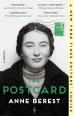
Anne Berest’s first novel to appear in English, THE POSTCARD, was a national bestseller, a Library JournalNPR and TIME Best Book of the Year, a Vogue Most Anticipated Book of the Year, winner of the Choix Goncourt Prize, and runner-up for the 2024 Dayton Literary Peace Prize. It was described as “stunning” by Leslie Camhi in The New Yorker, as a “powerful literary work” by Julie Orringein The New York Times Book Review, and as “intimate, profound, essential” in the pages of ELLE magazine. Her new novel, GABRIËLE, is based on the life of Gabriële Buffet, whose extraordinary impact on 20th-century avant-garde art and whose remarkable life have largely been obscured. Berest lives in Paris.

Anne Berest

Books by Anne Berest

written by Anne Berest and Claire Berest, translated by Tina Kover - Fiction, Historical Fiction

Paris, 1908. At the height of the Belle Époque, Gabriële Buffet --- a brilliant young musician fresh out of Europe’s most elite conservatory --- meets Francis Picabia, a charismatic and explosive Spanish painter. Their intense love affair plunges them into a Paris alive with artistic experimentation and social rebellion. Soon after, Gabriële meets the enigmatic Marcel Duchamp. Before long, the three have embarked on a passionate and unconventional relationship that will define their personal stories --- and in the process reshape modern art. As Europe moves from exuberance to upheaval, and World War I looms, Gabriële, Francis Picabia, Marcel Duchamp and their milieu challenge every convention: about marriage, sexuality, authorship and artistic freedom.

written by Anne Berest, translated by Tina Kover - Fiction, Historical Fiction

January 2003. Together with the usual holiday cards, an anonymous postcard is delivered to the Berest family home. On the front, a photo of the Opéra Garnier in Paris. On the back, the names of Anne Berest’s maternal great-grandparents, Ephraïm and Emma, and their children, Noémie and Jacques --- all killed at Auschwitz. Years after the postcard is delivered, the heroine of this novel is moved to discover who sent it and why. What emerges is a moving saga of a family devastated by the travails of the 20th century and partly restored through the power of storytelling.